Shipping FCL Containers from China to Morocco: The Complete 2026 Guide (Rates, Transit Times & Customs)
· By SinoShipment
Construction companies importing tiles, electronics distributors shipping consumer goods—if you’re moving full containers from China to Morocco, you already know the freight rate is only half the story. The other half is customs procedures that changed in January, port congestion that shifts monthly, and compliance rules that can hold your cargo for weeks if you miss one document.
Morocco is in the middle of an infrastructure and manufacturing expansion cycle—2030 World Cup preparations, the Kenitra–Marrakech high-speed rail, and booming automotive and renewable energy supply chains. Tanger Med handled 11.1 million TEU in 2025, entering the global top 16 container ports for the first time. This guide covers 2026 pricing, port comparisons, and PortNet/BADR compliance; for our full service scope, see freight shipping from China to Morocco.
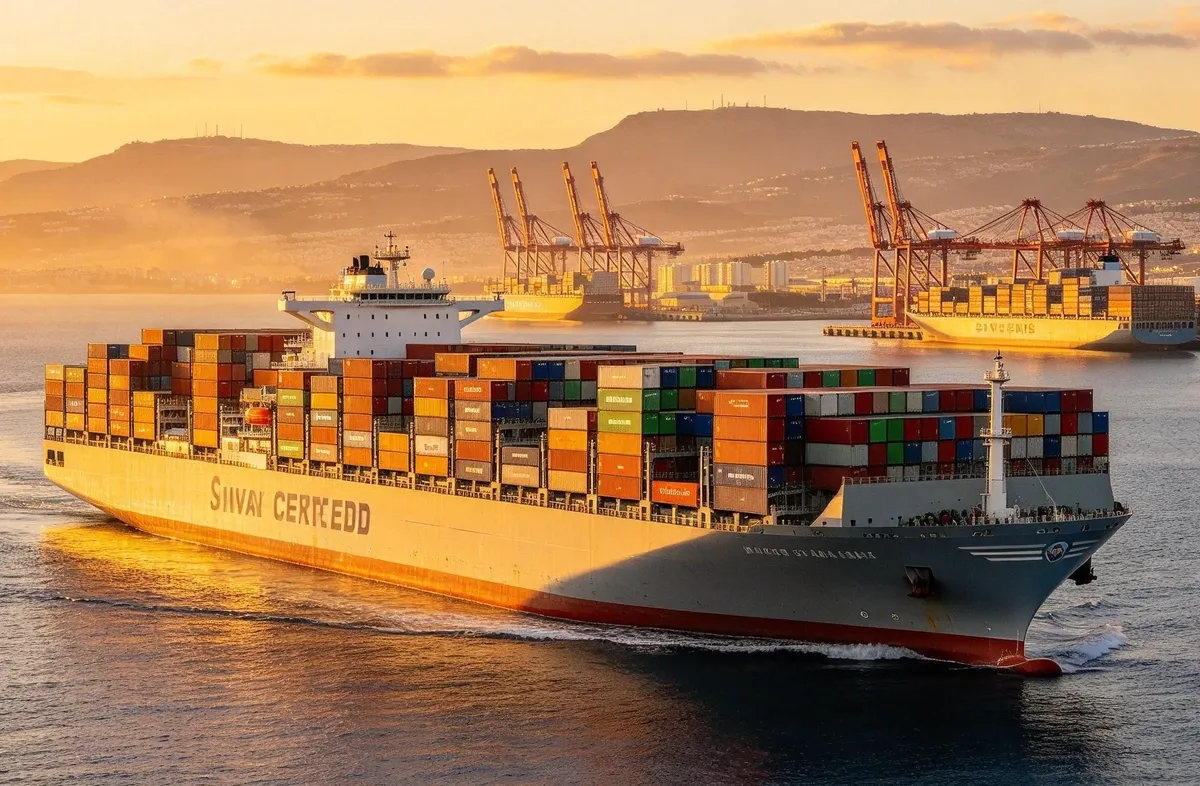
Quick Answer: FCL Shipping Cost from China to Morocco in 2026
For importers needing immediate figures, here are the current market rates for FCL shipping cost from China to Morocco as of October 2026:
| Container Type | Price Range (USD) | Transit Time (Port-to-Port) | Best For |
|---|---|---|---|
| 20GP (20ft) | $1,900–$2,900 | 25–38 days | Small to medium shipments (33 CBM) |
| 40GP (40ft) | $3,500–$4,800 | 25–38 days | Large shipments (67 CBM) |
| 40HQ (40ft High Cube) | $3,600–$4,900 | 25–38 days | Voluminous cargo (76 CBM) |
Key Insight: That 20ft rate swings widely depending on where in China you load. Shenzhen and Guangzhou offer the most competitive rates due to high export volume, while northern ports like Qingdao and Tianjin typically cost 10–20% more due to transshipment requirements.
Our Industry Insight: Importers who book Tanger Med direct sailings 3–4 weeks in advance during the October–November pre-holiday rush save an average of $300–$500 per 40HQ compared to last-minute bookings on Casablanca-bound transshipment services. The key is locking in space before carrier General Rate Increases take effect.
Tanger Med vs Casablanca: Which Port Should You Ship To?
Tanger Med — Africa’s Largest Container Hub
Tanger Med handled 11,106,164 TEU in 2025 (up 8.4% year-over-year), with total cargo throughput of 161 million tons. It ranks as the 16th largest container port globally as of 2026.
- Terminals: TC1 (APM Terminals), TC2 (Eurogate), TC3 (Tanger Alliance), TC4 (APM Terminals expansion)
- Advantages: Direct mainline calls from MSC, Maersk, CMA CGM, COSCO; dense sailing schedules; fast clearance (typically 24–48 hours); ocean freight usually $200–$400 cheaper per container
- Consideration: Inland trucking to Casablanca costs $450–$600 per 40GP
Casablanca — The Consumer-Market Gateway
Casablanca Port remains Morocco’s primary commercial import gateway, handling 723,973 TEU in H1 2025 (a record half-year). June 2025 alone saw 137,800 TEU, up 10% year-over-year.
- Terminals: SOMAPORT and TC3 (TC3PC), estimated combined capacity of approximately 1.5 million TEU
- Advantages: Proximity to Casablanca–Rabat consumption center; trucking costs only $150–$250 locally; ideal for central and southern distribution
- Consideration: Mostly feeder services with fewer direct sailings; peak season congestion can add 5–7 days delay before Ramadan
Agadir and Nador West Med
Agadir serves the Souss-Massa agricultural region with approximately 150,000 TEU annual capacity and 900 reefer plugs—ideal for refrigerated cargo and southern distribution. Nador West Med, which opened its first terminal in late September 2026 and is ramping up operations through Q4, will add 3.4 million TEU capacity to serve the Oriental region. For nearby North African markets, see our freight shipping from China to Algeria route.
Real-Life Scenario: A Rabat-based furniture importer planned to ship via Casablanca for convenience. We recommended Tanger Med instead: despite $480 in additional trucking costs, the ocean freight savings of $620 and 6-day faster clearance resulted in $140 net savings and earlier market availability.
Full-Cost Port Matrix
| Port | Ocean Freight (40GP) | Clearance Time | Truck to Casablanca | Best For |
|---|---|---|---|---|
| Tanger Med | $3,500–$4,200 | 24–48h | $450–$600 | North, Tangier, Rabat, time-sensitive |
| Casablanca | $3,800–$4,600 | 24–72h | $150–$250 | Casablanca, Rabat, Marrakech |
| Agadir | Via transshipment | 48–72h | $500–$700 | South, reefer, agriculture |
| Nador West Med | Emerging | 48–72h | $600–$800 | Oriental region |
For importers also exploring neighboring North African markets, we offer freight shipping from China to Tunisia and freight shipping from China to Libya with similar direct and transshipment routing via Tanger Med.
City Recommendations: Tangier/Tetouan → Tanger Med; Casablanca/Marrakech → Casablanca; Agadir/South → Agadir; Nador/Oujda → Nador.
How Long Does FCL Shipping Take from China to Morocco?
China to Morocco sea freight transit time depends on routing and seasonal factors. For the broader regional context, see our guide to freight shipping from China to Africa:
| Origin | Destination | Routing | Typical Transit | Peak Season |
|---|---|---|---|---|
| Shenzhen/Guangzhou | Tanger Med | Direct | 25–30 days | 28–33 days |
| Shenzhen/Guangzhou | Casablanca | Via Tanger Med | 30–38 days | 35–42 days |
| Shanghai/Ningbo | Tanger Med | Direct | 28–32 days | 30–35 days |
| Shanghai/Ningbo | Casablanca | Via Tanger Med | 32–40 days | 36–44 days |
| Qingdao/Tianjin | Tanger Med | Via Shanghai/Ningbo | 33–40 days | 36–44 days |
Suez Canal vs Cape of Good Hope: During the 2024–2025 Red Sea crisis, many carriers rerouted via the Cape of Good Hope, adding 10–14 days. As of October 2026, BIMCO data shows weekly capacity through the Suez Canal has recovered to over 50% of pre-crisis levels. MSC, Maersk, CMA CGM, and COSCO are gradually resuming transits; industry analysts project full recovery by early 2027.
Our Industry Insight: The “50–55 day” figures still circulating online reflect Cape of Good Hope detours. Current Shenzhen to Tanger Med transit time is 25–30 days on direct services. Always confirm the routing with your forwarder—some carriers still publish conservative schedules assuming Suez disruptions.
Door-to-Door Timeline: Factory pickup (2–5 days) + China export clearance (1–3 days) + Ocean transit (25–40 days) + Morocco clearance (1–5 days) + Inland delivery (1–3 days) = 30–55 days total.
20GP vs 40GP vs 40HQ: Choosing the Right Container
Specifications at a Glance
| Specification | 20GP | 40GP | 40HQ |
|---|---|---|---|
| Internal Volume | 33.2 CBM | 67.7 CBM | 76.3 CBM |
| Max Payload | 28,100 kg | 26,100 kg | 26,100 kg |
| Door Height | 2.28m | 2.28m | 2.58m |
| Best For | Dense/heavy cargo | Mixed palletized goods | Light, voluminous items |
Density-Based Selection
- >500 kg/CBM (tiles, stone, metal parts, machinery) → 20GP, hits weight limit first
- 250–500 kg/CBM (electronics, auto parts, consumer goods) → 40GP
- <250 kg/CBM (furniture, textiles, toys, plastics) → 40HQ, volume fills first
The 40HQ Economics
The 40HQ container price China to Casablanca typically runs only $100–$200 more than 40GP, despite offering 12.7% more volume. For example: Shenzhen→Tanger Med at $3,800 for 40GP ($56.1/CBM) vs $3,900 for 40HQ ($51.1/CBM) reduces unit cost by 8.9%.
Real-Life Scenario: A Foshan furniture exporter shipping KD (knock-down) sofas to Casablanca switched from 40GP to 40HQ. The KD packaging reduced volume by 40%, allowing 8 additional CBM per container. Combined with the 40HQ space advantage, they cut shipping cost per sofa by 22%.
Step-by-Step: How to Import FCL from China to Morocco
Step 1: Quote & Book (Days 1–3)
Provide your freight forwarder with: origin port, destination port, container type, cargo weight/volume, HS codes, and preferred Incoterms (FOB, CIF, DAP). Confirm ocean freight, surcharges, free time, and destination charges.
Step 2: Supplier Pickup & Consolidation (Days 3–7)
Use Shenzhen or Guangzhou warehouse facilities for consolidation, inspection, labeling, palletizing, and ISPM 15 wood packaging treatment. Combining multiple suppliers into one FCL reduces per-unit costs versus separate LCL shipments.
Step 3: China Export Clearance (Days 7–10)
Required documents: Commercial Invoice, Packing List, customs declaration, sales contract, Certificate of Origin (if applicable), and fumigation certificate for wooden packaging. Clearance typically takes 1–3 working days.
Step 4: VGM, Loading & Bill of Lading
Submit Verified Gross Mass (VGM) 24 hours before loading. Use third-party loading supervision for high-value cargo. The Bill of Lading must show the consignee’s ICE (Identifiant Commun de l’Entreprise) and NIF (tax number) matching the Moroccan import license. For air shipments, our air freight service offers an alternative for urgent cargo.
Step 5: Ocean Transit & Arrival Notice
Track the vessel using the container number. Send Commercial Invoice, Packing List, B/L, and Certificate of Conformity (CoC) to your Moroccan customs broker 5–7 days before arrival for pre-clearance review.
Step 6: Morocco Import Clearance (PortNet/BADR/DUM)
- ICE Registration: Ensure your Moroccan entity has the 15-digit ICE number
- Engagement d’Importation: Your bank files the import commitment via PortNet (typically 24–48 hours, valid 6 months)
- DUM Declaration: Licensed customs broker submits the Déclaration Unique des Marchandises via BADR system
- Channel Assignment: Green (automatic), Orange (document review), or Red (physical inspection)
- BAE Release: Pay duties and taxes to obtain the Bon À Enlever for cargo release
Step 7: Inland Delivery & Container Return
Arrange trucking from port to warehouse. Tanger Med to Casablanca costs $450–$600 per 40GP; local Casablanca delivery runs $150–$250. Return the empty container within the free time period to avoid detention charges.
Morocco Import Duty from China in 2026: Taxes & Compliance
Navigating Morocco customs clearance for China imports requires understanding the 2026 Finance Law changes and product compliance requirements.
The Duty Stack: DI + TPI + VAT
| Component | Rate | Applied On |
|---|---|---|
| DI (Droit d’Importation) | 2.5%–40% | CIF Value |
| TPI (Parafiscal Tax) | 0.25% | CIF Value |
| TVA (VAT) | 20% | CIF + DI + TPI |
Effective Tax Burden Examples:
- Industrial machinery (DI 2.5%): ~23.3% total
- Electronics/Auto parts (DI 10–17.5%): ~32–41% total
- Furniture/Textiles (DI 25–30%): ~50–56% total
2026 Tariff Changes That Affect Your Landed Cost
| Category | 2026 Change | Impact |
|---|---|---|
| Smartphones | 17.5% → 2.5% (Jan 2026) | Major cost reduction for mobile devices |
| Wood & Wood Articles (HS 44/94) | Flat 6% | Furniture, doors, flooring |
| PVC Resin | 2.5% → 10% | Plastic products, construction materials |
| Finished Goods | Selective increases (freezers, washing machines, auto windshields, jacquard knit) | Home appliances, auto parts, textiles |
Important Clarification: China’s zero-tariff policy for 53 African countries effective May 1, 2026 applies to Moroccan exports to China (such as argan oil), not to Chinese exports to Morocco. Do not confuse the direction of trade when calculating duties.
VoC/CoC: Which Products Need Certification?
Since February 2020, Morocco requires Verification of Conformity (VoC) for regulated categories including electronics, toys, building materials, and certain automotive parts. Obtain the Certificate of Conformity (CoC) from SGS, Bureau Veritas, TÜV Rheinland, or Intertek before shipment.
- Cost: $300–$2,000 per shipment
- Timeline: 2–4 weeks
- Risk without CoC: Cargo blocked at customs, forced return or destruction, accumulating demurrage fees
CMIM, ANRT, ONSSA, Labeling & ISPM 15
- CMIM Mark: Mandatory for low-voltage equipment, EMC devices, and toys; CE marking alone is not sufficient
- ANRT Approval: Required for wireless/telecommunication devices
- ONSSA Permit: Required for food products and plant materials
- Labeling: Food labels must include Arabic (additional languages permitted); cosmetics require Arabic/French
- ISPM 15: Wooden packaging must be heat-treated or fumigated
DDP vs DAP vs FOB vs CIF: What Actually Works for Morocco
Incoterms Comparison
| Incoterm | Seller Responsibility Ends | Best For Morocco B2B? |
|---|---|---|
| EXW | Factory gate | Only if you have full logistics team in China |
| FOB | On board vessel | Standard for experienced importers with local broker |
| CIF | Arrival at Moroccan port | Common in supplier quotes; destination charges often opaque |
| DAP | Your warehouse, duties unpaid | Most compliant B2B door-to-door solution |
| DDP | Your warehouse, duties paid | Only viable with Moroccan registered import entity |
The Legal Boundary of DDP in Morocco
Moroccan law requires import duties and VAT to be declared and paid by a Moroccan-registered entity holding NIF/ICE. The Engagement d’Importation must be filed by the buyer through a Moroccan bank via PortNet.
Therefore:
- True DDP: Only possible if the seller maintains a Moroccan registered import entity or uses a compliant local Importer of Record (IOR) structure
- DAP + Local Clearance: The foreign forwarder handles transport to your warehouse; you act as IOR and pay duties—most common and compliant
- B2C Express DDP: Courier companies act as importer for small parcels; this does not apply to B2B full containers
Our Industry Insight: When a forwarder quotes “DDP including all taxes” for Morocco, always ask: “Who is the Importer of Record on the customs declaration?” If the answer is vague or they suggest using someone else’s ICE number, walk away. The compliant path is DAP with your own import license, or a verified local IOR partnership.
7 Ways to Reduce Your FCL Shipping Costs from China to Morocco
Achieving cheapest FCL shipping China to Morocco requires strategic planning beyond base rates:
- Consolidate Suppliers: Combine multiple vendors into one 20GP/40HQ at a Shenzhen warehouse instead of separate LCL shipments
- Use 40HQ for Light Cargo: Reduce per-CBM cost by 8–10% for furniture, textiles, and plastics
- Avoid Peak Seasons: Book around Chinese New Year (Jan–Feb), pre-Ramadan rush, and Q4 holiday season; target March–May or mid-August to mid-September
- Verify HS Codes: Misclassification triggers tax adjustments, fines, and increased inspection rates
- Optimize Packaging: KD furniture and nested packing can reduce volume by 40–60%
- Negotiate Free Time: Standard is 7 days; negotiate 10–14 days to buffer clearance delays
- Book 3–4 Weeks Ahead: Lock in rates before carrier General Rate Increases
Why Choose Sinoshipment for China-Morocco FCL Shipping
Since 2013, we’ve watched Tanger Med grow from a regional hub into Africa’s largest container port—and helped hundreds of importers adjust their routing strategies accordingly. That decade of hands-on experience is what separates us from forwarders who treat Morocco as just another destination. We operate across the wider China to Africa network, with particular strength in Mediterranean and North African corridors.
Our Competitive Advantages
Direct Carrier Contracts: We maintain direct booking agreements with MSC, Maersk, CMA CGM, and COSCO, guaranteeing space allocation during peak seasons when spot market rates spike.
Shenzhen Warehouse Facilities: Our warehouse services in Shenzhen and Guangzhou offer consolidation, quality inspection, ISPM 15 pallet treatment, Arabic/French labeling compliance, and professional loading supervision.
Licensed Morocco Broker Network: We partner with vetted customs brokers in Casablanca and Tangier who specialize in PortNet/BADR filings and pre-clear HS code classification against the VoC regulated list. Learn more about our customs clearance service.
Transparent Pricing: We provide itemized quotes covering ocean freight, origin/destination THC, documentation, and estimated duties—no hidden charges that inflate your invoice after departure. For high-value shipments, consider our cargo insurance options to protect against transit risks.
Multilingual Support: English, French, Arabic, and Chinese account managers ensure clear communication with both your Chinese suppliers and Moroccan consignees.
Real-Life Scenario: A Marrakech furniture brand sourced from three Foshan factories. We consolidated 18 CBM of LCL cargo into one 40HQ at our Shenzhen warehouse, completed ISPM 15 treatment and Arabic labeling, and shipped direct to Tanger Med. Result: 22% lower shipping cost per CBM, 5 days faster transit, and zero customs holds.
Frequently Asked Questions (FAQ)
How much does it cost to ship a 20ft container from China to Morocco?
For a 20ft container, expect $1,900–$2,900 base ocean freight (port-to-port). Total landed cost including surcharges, insurance, and import taxes typically reaches $3,500–$5,500 depending on cargo value and destination port.
How much does a 40ft container cost from China to Morocco?
A 40ft container shipping cost from China to Morocco ranges from $3,500 to $4,800 for standard 40GP, and $3,600 to $4,900 for 40HQ. The 40HQ offers the best value per cubic meter for shipments exceeding 50 CBM.
How long does FCL shipping take from China to Morocco?
FCL shipping time from China to Morocco is typically 25–30 days port-to-port for Tanger Med direct services, and 30–40 days for Casablanca via transshipment. Add 7–14 days for clearance and inland delivery, for 32–55 days door-to-door.
What is the cheapest way to ship a full container from China to Morocco?
The cheapest FCL shipping China to Morocco is typically found on Shenzhen to Tanger Med routes during off-peak months (March–May, September–October). Booking 4–6 weeks in advance and choosing 40HQ over 20GP for larger shipments reduces per-unit costs by 20–30%.
Should I ship to Tanger Med or Casablanca?
Choose Tanger Med for northern Morocco (Tangier, Tetouan) and time-sensitive cargo with its 24–48 hour clearance. Choose Casablanca for central distribution to Casablanca, Rabat, and Marrakech, despite slightly higher ocean freight, due to lower inland trucking costs.
What documents are required for Morocco customs clearance?
Required documents include: Commercial Invoice (French or bilingual with HS codes), Packing List, Bill of Lading (showing consignee ICE/NIF), Certificate of Origin, Engagement d’Importation (via PortNet), Certificate of Conformity (for regulated products), and ISPM 15 treatment proof for wooden packaging.
Do I need an ICE number to import into Morocco?
Yes. The ICE (Identifiant Commun de l’Entreprise) is a 15-digit business identifier mandatory for all Moroccan importers. Your customs broker will use this for BADR declarations, and it must match the consignee on the Bill of Lading.
Is DDP shipping from China to Morocco available?
DDP shipping from China to Morocco is only legally viable if the seller maintains a Moroccan registered import entity or uses a compliant local Importer of Record. Most B2B shipments use DAP (Delivered at Place) terms, where the buyer clears customs and pays duties under their own ICE number.
What is demurrage, and how many free days do I get in Morocco?
Demurrage is the charge for keeping a container at the port beyond the free time period. Morocco typically offers 7 days free time; charges start at €21–€23 per day for 20ft containers and €42–€46 for 40ft containers during days 8–14, escalating thereafter.
Can I ship furniture, electronics, or batteries in FCL to Morocco?
For e-commerce sellers shipping to Morocco, our Amazon FBA service provides specialized head-haul logistics and warehouse preparation. Learn more about how to ship electronics and gadgets from China for detailed compliance requirements.
Yes, but with conditions: Furniture requires ISPM 15 treated wood packaging; electronics may require VoC certification and CMIM marking; batteries require MSDS and UN38.3 documentation. Solar panels and auto parts are standard FCL cargo but verify HS classification for duty rates.
Conclusion
Here’s the short version: Tanger Med for speed, Casablanca for central distribution, and never sign a DDP quote without naming the Importer of Record. The details that separate a smooth shipment from a costly delay:
- Choose the Right Port: Tanger Med for northern Morocco and time-sensitive cargo; Casablanca for central distribution despite slightly higher base rates.
- Budget for Total Landed Cost: Base freight represents only 60–70% of total expense; account for THC, surcharges, duties (DI + TPI + VAT), and potential demurrage.
- Prioritize Pre-Compliance: Complete ICE registration, bank import commitments, and VoC certification before the vessel sails—not after arrival.
- Verify DDP Legality: Ensure any “DDP” quote identifies a legitimate Moroccan Importer of Record; otherwise use DAP with your own import license.
At Sinoshipment, we specialize in navigating these complexities. Get an itemized FCL quote—including origin charges, ocean freight, and estimated Moroccan duties—within 24 hours. No hidden fees, no surprises, just a clear breakdown of what your shipment will actually cost.