Strait Closed? No Problem: Shipping Building Materials & Ceramics from Canton Fair to Iran via Rail-Land Multimodal Transport (2026 Guide)
· By SinoShipment
Shipping building materials and ceramics from Canton Fair to Iran via rail-land multimodal transport is no longer just an alternative — it has become a strategic necessity. In April 2026, when U.S. naval pressure intensified around the Strait of Hormuz, the Xi’an–Tehran rail corridor saw train frequency surge from one departure per week to one every three to four days. Container rates climbed roughly 40% to around $7,000 per 40ft box, yet demand continued to outstrip available slots. Trade did not stop. It simply found a new path.
If you have just signed orders for 50,000 porcelain tiles and 200 tons of sanitary ware at the Canton Fair, the last thing you want to hear is that the Strait of Hormuz may close. Your buyers in Tehran, Isfahan, or Mashhad are waiting. Your project deadlines are fixed. This guide gives you a complete, actionable playbook for moving building materials and ceramics from the Canton Fair to Iran by rail-land multimodal transport — covering route selection, cost and transit benchmarks, packaging specifics for fragile cargo, customs documentation, risk management, and a real case study from our own operations.
1. What Is Rail-Land Multimodal Transport from China to Iran?
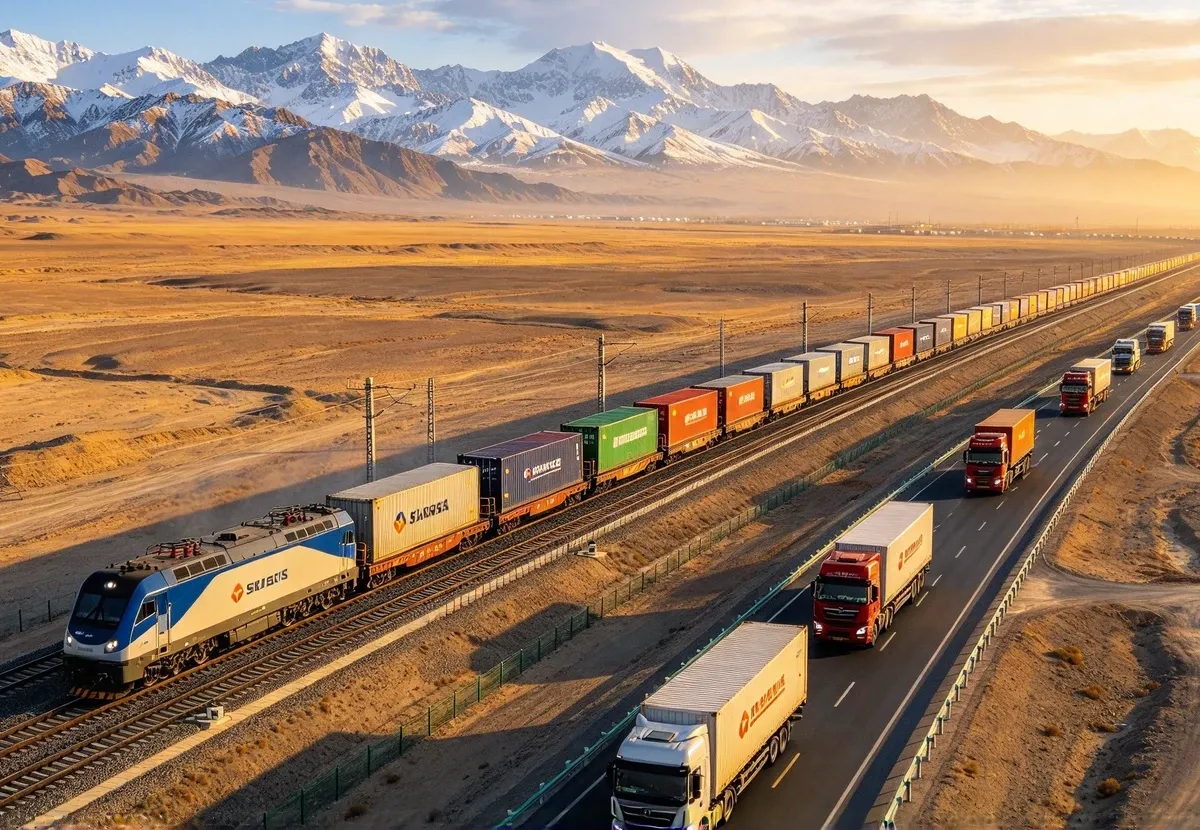
Rail-land multimodal transport is a containerized overland shipping model that moves cargo from Chinese industrial hubs westward through Central Asia by rail, then completes final delivery by truck within Iran. It sits between sea freight and air freight in both cost and speed, and it completely bypasses the Strait of Hormuz.
Key terms you will encounter:
- FCL (Full Container Load): You book an entire 20ft or 40ft container for your cargo alone.
- LCL (Less than Container Load): Your cargo shares a container with other shippers, ideal for smaller volumes.
- Block Train: A dedicated train with fixed departure schedules, offering more predictable transit times.
- Gauge Change: China uses standard gauge (1,435 mm), while Kazakhstan, Turkmenistan, and Iran use broad gauge (1,520 mm). Containers must be reloaded onto different wagons at border hubs.
- CIM/SMGS Consignment Note: The international rail waybill governing carriage across Europe and Asia.
- DDP (Delivered Duty Paid): The forwarder handles everything including duties and taxes — a true door-to-door, hassle-free option.
The corridor runs approximately 10,400 kilometers. The Kazakhstan–Turkmenistan–Iran rail link has been operational since 2014, and China’s 2025 infrastructure upgrades brought standard transit down to roughly 15 days — compared with 30–40 days by sea under normal conditions. For a detailed route breakdown, see our guide on rail freight from China to Iran via Central Asia.
Our Industry Insight: Since 2013, we have watched this corridor mature from a niche option into a mainstream solution. In 2024, the railways of China, Kazakhstan, Turkmenistan, and Iran signed a unified tariff agreement in Beijing, establishing a benchmark 15-day transit from Khorgos to Tehran. That single agreement is why schedules have stabilized and frequencies have surged in 2025 and 2026. When you hear forwarders quote “14–18 days,” that is not marketing — it is the result of a formal, multilateral framework.
2. Why the Strait of Hormuz Matters — and Why Trade Doesn’t Stop
The Strait of Hormuz is one of the world’s most critical maritime chokepoints. When tensions escalate — as they did in April 2026 with the U.S. naval blockade — the consequences for shipping are immediate: carrier suspensions, soaring war-risk insurance premiums, and severe container space shortages on China–Iran sailings.
Yet here is what the headlines often miss: closing the Strait of Hormuz does not stop trade between China and Iran. The two countries are fully connected by land across Central Asia, and that overland network is more developed today than at any point in history.
Consider the data. According to Sandstone Group’s May 2026 analysis, within weeks of the blockade tightening, the Xi’an–Tehran rail route went from roughly one train per week to one every three to four days. Demand outstripped supply, pushing 40ft container rates to approximately $7,000 — about 40% above normal levels. The corridor did not just absorb the overflow; it became the primary artery for a wide range of goods, from consumer electronics to industrial materials to building products. For a broader analysis of how geopolitical disruptions affect this lane, read our Strait of Hormuz closure shipping impact report.
Bottom line: your cargo will get there. The only question is how much you’ll pay and how long you’ll wait.
3. The Main China–Iran Rail Corridor: Route, Nodes, and Transit Time
 The standard corridor follows this path:
China origin → Khorgos / Alashankou / Altynkol → Kazakhstan → Turkmenistan → Sarakhs / Incheh Burun → Iran → Tehran (Aprin Dry Port / Shahyar Yard) → final destination
Each border node serves a specific function, and most delays occur at these handoff points rather than on the open track.
| Node | Function | Typical Delay |
|---|---|---|
| Khorgos Dry Port | Consolidation, China export customs, first gauge change | 1–2 days |
| Altynkol | Kazakhstan entry, reload to broad-gauge wagons | 0.5–1 day |
| Dostyk | Major transshipment and gauge-change hub | 1–2 days |
| Sarakhs | Primary Iran entry point (~80% of rail freight) | 1–2 days |
| Incheh Burun | Alternative Caspian-side entry for project cargo | 1–2 days |
| Aprin / Shahyar | Final yard, IRICA clearance, de-stuffing, dispatch | 1–2 days |
Standard terminal-to-terminal transit is roughly two weeks. Premium block-train services can compress this to about 14 days, typically at a 20–30% cost premium.
| Leg | Activity | Estimated Time |
|---|---|---|
| China origin to Khorgos / Alashankou | Haulage + export customs | 2–4 days |
| Khorgos to Kazakhstan broad-gauge entry | Gauge change + border formalities | 1–2 days |
| Kazakhstan + Turkmenistan mainline | Movement under customs bond | 6–8 days |
| Dostyk / Sarakhs gauge changes | Reloading onto new wagons | 2–3 days |
| Iran entry + IRICA clearance | Form T1, inspection, duty assessment | 1–3 days |
| Tehran yard to final destination | Last-mile trucking | 1–2 days |
| Total | 14–18 days |
Destination-specific estimates from our operational experience:
- Tehran: 14–16 days
- Mashhad: 16–18 days
- Isfahan: 15–17 days
- Shiraz: 17–19 days
- Bandar Abbas (inland extension): ~18 days
For a full comparison of all shipping modes to Iran, see our sea shipping from China to Iran guide and our overview of freight shipping from China to Iran.
4. Shipping Building Materials & Ceramics from Canton Fair: A Complete Workflow
The Canton Fair (China Import and Export Fair) runs in three phases each year, with Phase 2 (April 23–27, 2026) featuring building materials, ceramics, sanitary ware, and home improvement products. For buyers sourcing tiles, sanitary ware, steel, aluminum profiles, and hardware, the logistics challenge begins the moment the exhibition ends.
Here is the typical pain point: you have placed orders with three different suppliers in Foshan, one in Guangzhou, and one in Shenzhen. Each supplier wants to ship separately. Each shipment carries its own minimum charges. And you need everything consolidated, inspected, and dispatched as quickly as possible.
The Sinoshipment Canton Fair workflow solves this through a five-step process:
- Pre-fair: Share your supplier list and expected order volume with our team. We pre-book rail slots and prepare warehouse space.
- During the fair: Suppliers deliver goods to our Shenzhen or Guangzhou warehouse, or we arrange factory pickup. We handle the coordination so you can focus on sourcing.
- Post-fair consolidation: We inspect, photograph, and confirm quantities. Fragile items receive custom packaging. We then consolidate everything into the optimal container configuration.
- Export and rail booking: Unified export declaration, fumigation certificates for wooden packaging, and block train reservation from Xi’an or Yiwu.
- Tracking and delivery: Real-time GPS tracking with photo updates at every major node, from warehouse loading to final delivery in Iran.
The advantages of multi-supplier consolidation are clear: lower per-unit shipping costs, uniform packaging standards that reduce damage risk, and the flexibility to choose between LCL and FCL based on actual cargo volume. For buyers with smaller orders, our LCL consolidation from China to Iran service offers the same cost-saving benefits without requiring a full container.
Real-Life Scenario: During the April 2026 Canton Fair, an Iranian buyer placed orders with four different tile manufacturers in Foshan. Instead of managing four separate small shipments, we consolidated everything at our Foshan warehouse into three 40HQ containers. By optimizing the loading plan, we achieved a 12% improvement in space utilization compared to what the individual suppliers had proposed — saving the client over $1,800 in freight charges alone.
5. Building Materials & Ceramics: Packaging, Loading, and HS Code Guide
Building materials and ceramics are not standard cargo. They are heavy, often fragile, and require specific handling at every stage — especially during the multiple gauge changes along the rail corridor.
Ceramic Tiles:
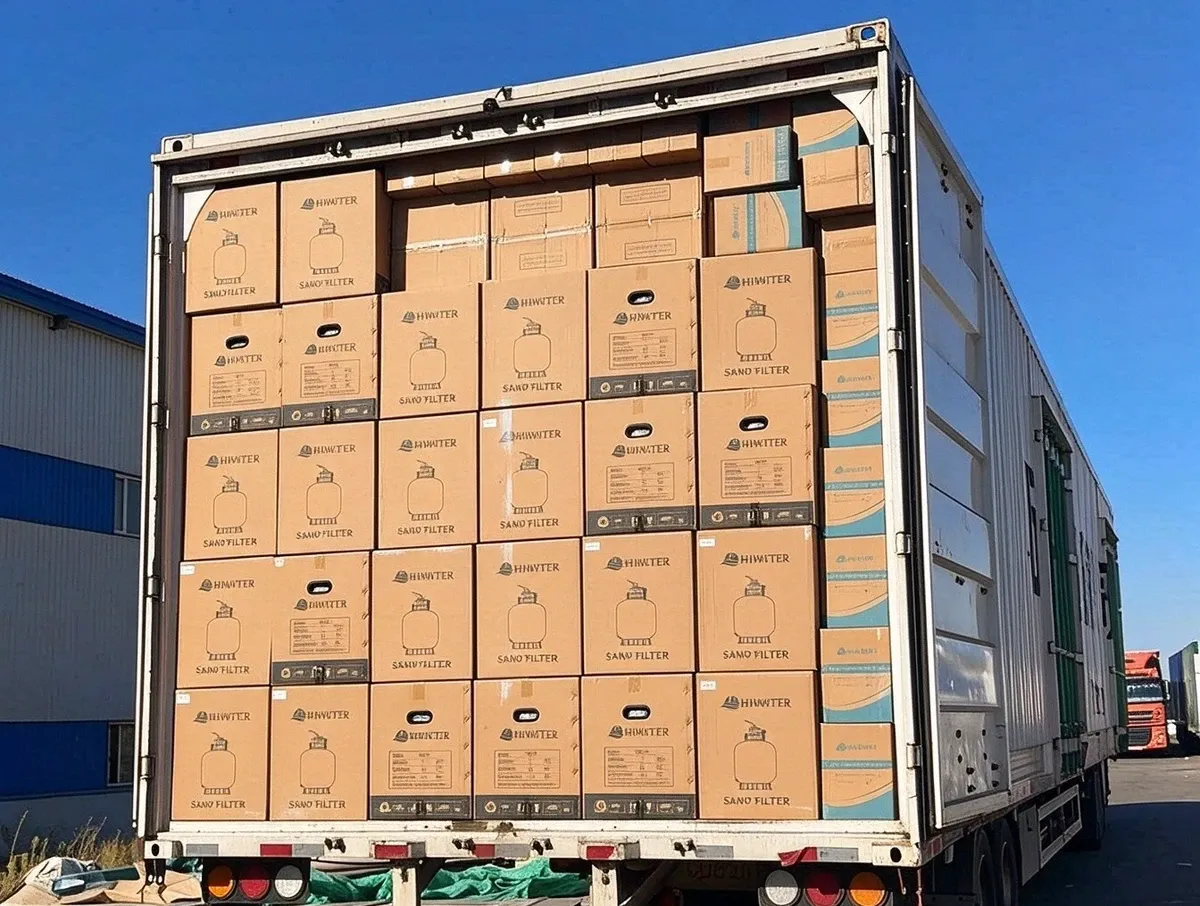
- Packaging: Every carton must be reinforced with corner protectors, foam padding, and shrink wrap. For long-distance rail with multiple transshipments, we strongly recommend full wooden crating for high-value porcelain tiles.
- Container loading: A standard 40HQ can accommodate approximately 1,350–1,500 cartons of tiles depending on size. Proper stacking patterns and dunnage between layers can reduce freight costs by 10–15% through better space utilization.
- Weight limits: Individual cartons should not exceed 25–30 kg to prevent handling damage during manual loading and unloading at border yards.
Sanitary Ware (Toilets, Basins, Faucets):
- Ceramic fixtures must be packed in individual wooden crates with full foam encapsulation. Faucets and metal fittings should be boxed with anti-corrosion wrapping.
Steel and Aluminum Profiles:
- Long items require custom A-frames or pallets to prevent bending. Bundling must be secure enough to withstand the vibration and lateral forces experienced during rail transit.
Glass Products:
- Glass sheets and panels must be shipped vertically in A-frames or L-frames with rubber padding between sheets. Under no circumstances should glass be laid flat — the risk of breakage during gauge-change handling is unacceptably high.
HS Code Reference for Iran-Bound Building Materials:
| Product Category | HS Code | Iran Import Duty (Reference) |
|---|---|---|
| Ceramic tiles (porcelain) | 6907.21 / 6907.22 | 20–40% |
| Sanitary ware (ceramic) | 6910.10 | 25–45% |
| Structural steel | 7308.90 | 10–25% |
| Aluminum profiles | 7604.10 | 15–30% |
| Architectural glass | 7005.29 | 20–35% |
Our Industry Insight: Iran’s duty rates for ceramic products are among the highest in the region, and misclassification is one of the most common — and most costly — errors we see. A single incorrect HS code digit can trigger a re-assessment that adds thousands of dollars in unexpected duties. We always recommend a pre-shipment classification review with your forwarder, especially for mixed loads of tiles, sanitary ware, and hardware.
For ceramic and glass shipments, our advice is simple: don’t skip the cargo insurance. At roughly 0.3–0.5% of cargo value, it’s cheap protection against the multiple transshipments along this corridor.
6. Cost Breakdown: Rail vs. Sea vs. Air (2026 Updated)
Here’s what you’ll actually pay across each mode in 2026:
| Mode | Transit Time | Cost (Approx.) | Best For |
|---|---|---|---|
| Rail FCL | 14–18 days | $5,000–$6,000 / 40ft | Building materials, ceramics, machinery |
| Rail LCL | 16–20 days | $150–$280 / CBM | Small volumes, samples, mixed orders |
| Sea FCL | 25–45 days | $1,050–$3,200 / 40ft | Non-urgent, very large volumes |
| Air Freight | 3–7 days | $4.50–$8.50 / kg | Urgent, high-value, very small shipments |
During crisis scenarios like the April 2026 blockade, rail FCL rates spiked to approximately $7,000 per 40ft container — roughly 40% above normal. Space became scarce, requiring bookings two to three weeks in advance. Sea freight simultaneously saw rate increases and service suspensions, making rail the more reliable option even at elevated prices.
Typical Add-On Costs for Rail Shipments:
| Cost Item | Estimated Range |
|---|---|
| Gauge change fee | $500–$800 per container |
| China export customs + inland haulage | $200–$500 |
| Iran import clearance (IRICA) | $300–$600 |
| Duties and VAT | 9%–40%+ of CIF value |
| Terminal handling at Aprin / Shahyar | $150–$350 |
| Final-mile trucking in Iran | $200–$800 |
Cost Optimization Tips:
- Book block train slots early, especially before and after major Chinese holidays.
- Optimize container loading to maximize space utilization.
- Choose DDP service to avoid unexpected destination charges. Learn more about our door to door shipping from China to Iran options.
7. Required Documents and Customs Clearance
Documentation consistency is critical on the China–Iran corridor. A mismatch between invoice value and cargo manifest is one of the most common triggers for multi-day inspection delays.
China Export Documents:
- Commercial Invoice — value declaration for export and Iran import duty assessment
- Packing List — weight, dimensions, package count
- Export Customs Declaration — filed with GACC (General Administration of Customs of China)
- Certificate of Origin (CO) — mandatory for Iran import
- Fumigation Certificate — required for all wooden packaging
- MSDS / Transport Identification Report — for batteries, liquids, powders, chemicals
International Rail Transport Document:
- CIM/SMGS Consignment Note — the governing contract of carriage for the multi-country corridor
Iran Import Documents:
- IRICA Form T1 — Iran’s transit declaration
- HS Code Validation — processed through Iran’s Single Window System
- Commercial ID (Kart-e Bazargani) — the Iranian importer’s mandatory registration
- Standard Certificate — additional certification for regulated products such as electronics, chemicals, and auto parts
Our customs clearance team handles both China export and Iran import formalities, ensuring documentation consistency at every stage. One thing we tell every client: the paperwork is where shipments get stuck, not the tracks. Get the documents right and the rest usually follows.
The Six-Step IRICA Clearance Process:
- Container arrives at the Iranian rail yard (Aprin Dry Port or Shahyar Yard).
- IRICA validates Form T1 and the CIM/SMGS consignment note.
- HS codes are verified against the Iran Single Window System.
- Duties and VAT are assessed based on CIF value.
- Physical inspection (if the shipment is selected).
- Release for inland delivery.
8. Risk Management and Contingency Planning
Every route has its weak points. The China–Iran rail corridor is no exception. What matters is knowing where the risks sit and planning around them before your cargo leaves the warehouse.
Primary Risk Categories:
- Geopolitical Risk: Strait of Hormuz closure, Red Sea spillover, sanctions escalation
- Operational Risk: Border congestion at Khorgos or Sarakhs, severe Kazakh winter weather, pre-CNY space shortages
- Documentation Risk: Inconsistencies triggering inspections and delays
- Cargo Damage Risk: Fragile goods breaking during multiple gauge-change transshipments
Mitigation Strategies:
- Multi-corridor backup: If the primary route through Kazakhstan experiences congestion, alternative corridors via Kyrgyzstan–Uzbekistan–Turkmenistan or through Afghanistan can be activated. We also maintain readiness on the freight shipping from China to Afghanistan corridor as a complementary routing option.
- Advance planning: Confirm logistics arrangements during the fair and reserve rail slots two to three weeks ahead.
- Insurance coverage: Purchase full-route cargo insurance including transshipment and inland delivery segments.
- Experienced forwarder: Choose a partner with direct Iran customs coordination, not just a booking agent.
Scenario-Based Contingency Plans:
| Scenario | Recommended Action |
|---|---|
| Strait partially disrupted | Prioritize rail; use sea as supplementary |
| Strait fully closed | Full rail + trucking; activate China–Afghanistan–Iran corridor if needed |
| Rail space constrained | Book earlier; consider LCL for flexibility; air freight for small high-value items |
9. Case Study: Canton Fair to Isfahan in 18 Days
In April 2026, an Isfahan-based building materials importer visited the Canton Fair and placed orders with a Foshan tile manufacturer: three 40HQ containers of porcelain tiles and one 40HQ of sanitary ware. The buyer had a 30-day deadline to receive the goods for a construction project.
The challenge: the Strait of Hormuz closure had suspended most ocean sailings, and air freight was prohibitively expensive for this volume.
The Sinoshipment Solution:
- During the fair, suppliers delivered goods to our Foshan warehouse.
- We performed quality inspection, photographed and confirmed all items, and applied custom wooden crating for the sanitary ware.
- We booked a premium Xi’an–Tehran block train with a 14-day transit commitment.
- Upon arrival at Aprin Dry Port, our Iran customs team completed IRICA clearance in two days.
- Trucking from Tehran to Isfahan took an additional two days.
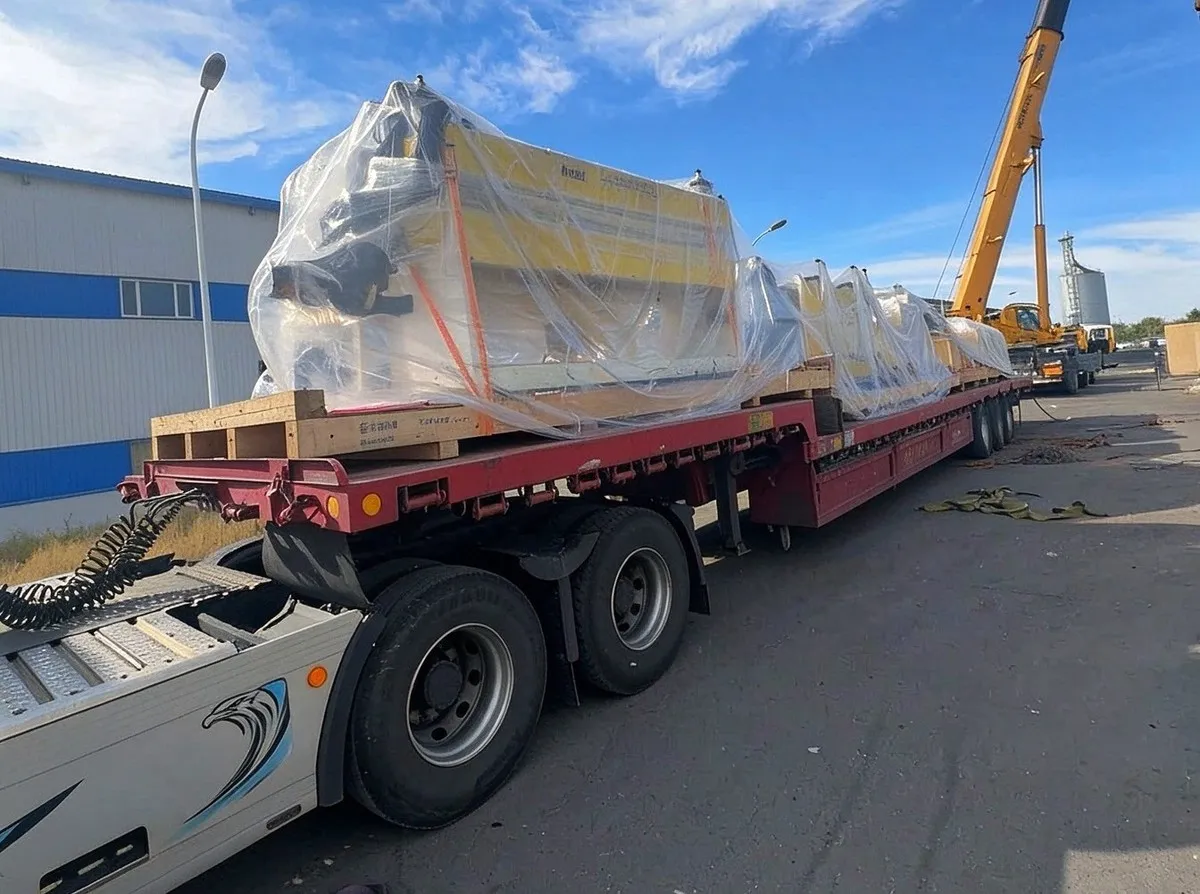
For oversized or heavy building materials that exceed standard container dimensions, our OOG shipping from China to Iran team can arrange flat-rack containers, heavy-lift equipment, and route surveys.
Total transit time: 18 days — twelve days ahead of the client’s deadline. Damage rate was under 1%. The client has since shifted all of their China–Iran shipments to Sinoshipment.
Key Success Factors: Early planning during the fair, professional fragile-cargo packaging, premium block train selection, and reliable Iran-side customs coordination. That’s the difference between someone who books trains and someone who actually moves your cargo.
10. Why Choose Sinoshipment for China–Iran Rail-Land Multimodal Transport?
Since 2013, Sinoshipment has operated as a professional freight forwarder from Shenzhen, China, serving over 5,000 clients across the Middle East, Europe, the Americas, Africa, Asia, and Oceania. Our deep expertise in the China–Iran corridor is built on a decade of hands-on operations, not just bookings.
Core Capabilities on the China–Iran Lane:
- Deep partnerships with Xi’an, Yiwu, and other major block train hubs, ensuring space even during peak demand
- In-house Iran customs coordination team, fluent in IRICA procedures and the Single Window System
- Warehouse network in Shenzhen, Guangzhou, and Foshan for fair-season consolidation, quality inspection, and custom packaging. Learn more about our warehouse services.
- Full DDP service covering duties, taxes, and final delivery
Value-Added Services:
- Specialized fragile-cargo packaging for ceramics, glass, and sanitary ware
- Full-route cargo insurance
- Multilingual support in English, Persian, Arabic, and Chinese
- Real-time tracking with photo updates at every major node
Want a quote for your next shipment? Need the full checklist? [Get in touch with our team] — we typically respond within a few hours.
FAQ
How long does rail freight take from China to Iran?
Standard terminal-to-terminal transit is roughly two weeks. Premium block-train services can achieve approximately 14 days. Total door-to-door time depends on the origin city, destination, and customs clearance speed.
What is the cost of a 40ft container from China to Iran by rail?
In 2026, normal rates range from $4,500 to $5,000 for station-to-station FCL. During crisis scenarios, rates have reached approximately $7,000. LCL is priced at $150–$280 per CBM.
Is it safe to ship to Iran via Bandar Abbas during Hormuz tension?
During periods of heightened tension, sea freight through Bandar Abbas carries elevated risk including carrier suspensions and soaring insurance premiums. Rail-land multimodal transport completely avoids these risks.
Can I ship ceramic tiles from Guangzhou to Tehran by rail?
Yes. Ceramic tiles are well-suited to rail FCL transport with proper wooden crating. Guangzhou and Foshan cargo can be consolidated at our warehouse and dispatched via the Xi’an or Yiwu rail hub.
What documents do I need to ship from China to Iran by rail?
China export: commercial invoice, packing list, customs declaration, certificate of origin, fumigation certificate (for wooden packaging). International rail: CIM/SMGS consignment note. Iran import: IRICA Form T1, HS code validation, and the importer’s Commercial ID.
What is the difference between DDP and DAP for Iran shipments?
DDP (Delivered Duty Paid) means the forwarder handles customs clearance and duty payment — ideal for buyers without an Iran import license or local agent. DAP (Delivered at Place) means the buyer handles import clearance and taxes.
How do I handle multiple suppliers from Canton Fair?
Deliver all supplier goods to the Sinoshipment warehouse in Shenzhen or Guangzhou. We provide consolidation, quality inspection, unified packaging, LCL/FCL optimization, and single-point export declaration.
What happens if the rail corridor is congested?
Alternative corridors via Kyrgyzstan–Uzbekistan–Turkmenistan or through Afghanistan can be activated. For urgent cargo, full trucking (10–15 days) is also an option.
Conclusion
The Strait of Hormuz closing does not stop China–Iran trade — it accelerates the shift to rail-land multimodal transport. For building materials and ceramics sourced at the Canton Fair, the two-week rail corridor offers the optimal balance between sea freight’s 25–45 days and air freight’s prohibitive per-kilogram rates.
Success on this lane depends on three things: proper packaging for fragile cargo, early booking during fair season, and a forwarder with genuine Iran customs expertise. Whether you are a first-time Canton Fair buyer or a seasoned importer, Sinoshipment is ready to design a customized rail-land multimodal solution that keeps your supply chain moving — no matter what happens at sea.