Canton Fair 2026 Survival Guide for Iranian Buyers: From Sourcing to Shipping (Complete Playbook)
· By SinoShipment
Canton Fair 2026 Survival Guide for Iranian Buyers is the only playbook you’ll need to navigate the world’s largest trade show, source reliable suppliers, and get your cargo home without costly surprises. If you’re an Iranian importer planning to attend the China Import and Export Fair in Guangzhou, you already know the stakes: SWIFT restrictions, complex customs rules, and currency volatility make every decision heavier than it is for other international buyers.
This guide walks you through the entire journey—from visa application and booth navigation to post-fair freight shipping from china to iran—so you leave the fair with profitable orders and a logistics plan that actually works.
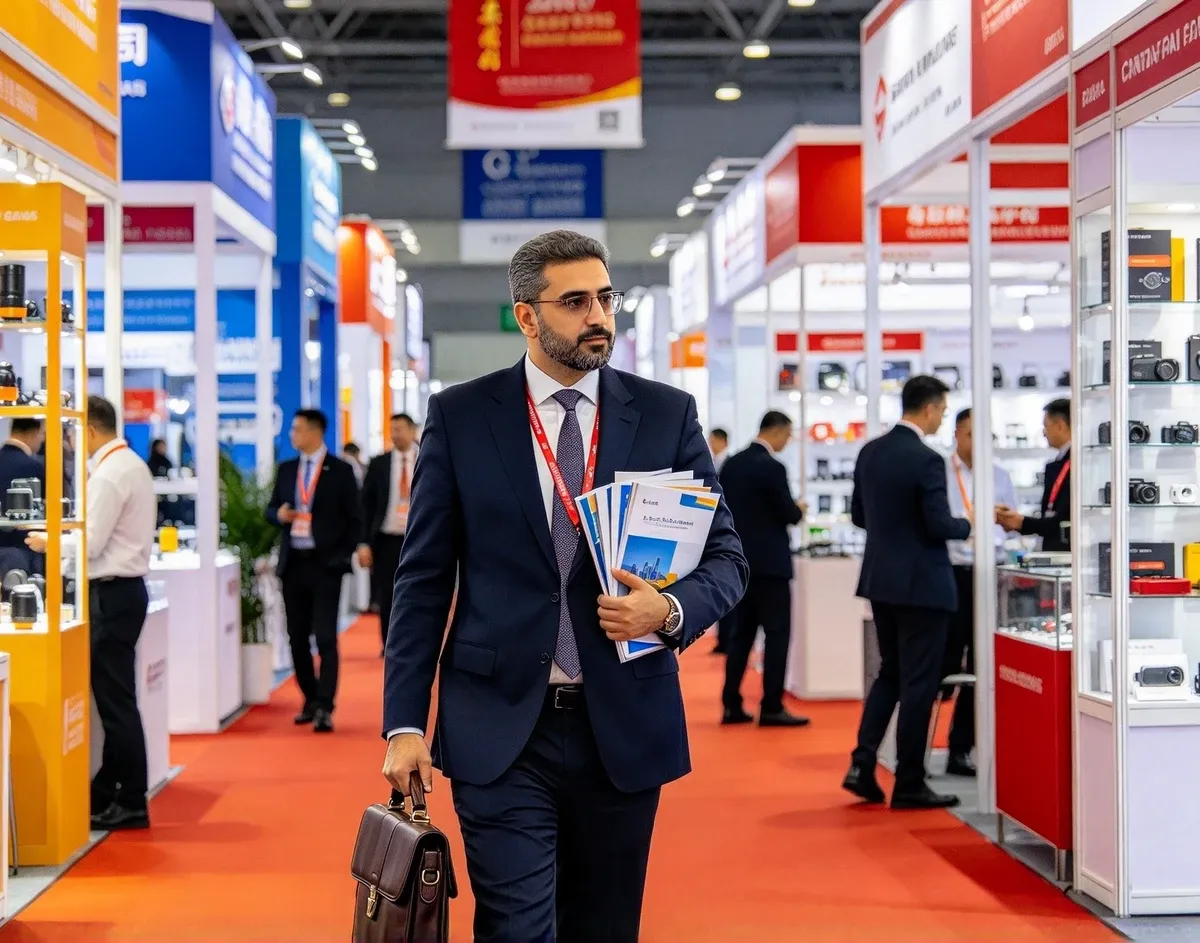
Canton Fair 2026 Dates, Phases, and What to Expect
The Canton Fair runs twice a year in Guangzhou at the Pazhou Complex. For 2026, the autumn session (the one most Iranian buyers target for year-end inventory) is expected to follow the standard mid-October schedule with three distinct phases:
| Phase | Dates (Expected) | Product Categories | Relevance for Iran Market |
|---|---|---|---|
| Phase 1 | Oct 15–19 | Electronics, machinery, vehicles, building materials | High – Iran imports massive volumes of Chinese electronics and industrial equipment |
| Phase 2 | Oct 23–27 | Consumer goods, gifts, home decor | Medium – Good for household goods wholesalers |
| Phase 3 | Oct 31–Nov 4 | Textiles, food, medical devices, office supplies | High – Textiles and food processing equipment are top Iranian imports |
Most Iranian buyers make the mistake of attending only Phase 1. In our experience serving 5,000+ clients since 2013, the buyers who secure the best margins visit both Phase 1 (for electronics and machinery) and Phase 3 (for textiles). The overlap between phases gives you time to verify suppliers from Phase 1 while discovering textile partners in Phase 3.
Flights from Tehran to Guangzhou
Direct flights from Imam Khomeini International Airport (IKA) to Guangzhou are available via Iran Air and China Southern Airlines, with a flight time of approximately 7.5 hours. Mahan Air also operates seasonal routes. Book at least 6–8 weeks in advance to secure fares around $800–1,200 round-trip.
Hotel Strategy for Iranian Buyers:
| Hotel Zone | Price Range (USD/night) | Pros | Cons |
|---|---|---|---|
| Pazhou/Canton Fair Area | $120–180 | Walk to venue, save taxi time | Limited dining options, book early |
| Zhujiang New Town (CBD) | $80–140 | Metro Line 8 direct to fair, restaurants | 25-minute metro ride |
| Yuexiu District (Old Town) | $50–90 | Authentic local food, shopping | 40+ minutes to fair, taxi needed |
Book through international platforms (Booking.com, Agoda) or Chinese apps (Ctrip/Trip.com). Iranian credit cards may not work on international sites—consider booking through a Chinese contact or using the hotel’s direct email for wire transfer payment.
Case Study:
An Isfahan-based textile importer booked a hotel 90 days in advance through a Guangzhou agent, securing a Pazhou-area room for $95/night. His competitor waited until 2 weeks before the fair and paid $180/night for a hotel 45 minutes away. The 10-minute walk to the venue each morning gave him first access to popular booths before crowds formed.
How to Attend Canton Fair 2026 from Iran: Visa, Travel, and Registration
Chinese M Visa for Iranian Citizens
You need a business visa (M visa) to attend the fair. Follow this timeline:
| Timeline | Action Required |
|---|---|
| 90 days before | Request invitation letter from Canton Fair official website or your Chinese supplier |
| 60 days before | Submit visa application to Chinese Embassy in Tehran with passport, photos, invitation letter, and business registration documents |
| 30 days before | Receive visa (processing takes 4–7 business days, express service available) |
| 7 days before | Confirm hotel booking and register online for buyer badge |
The invitation letter is critical—it significantly speeds up visa approval. If you don’t have a Chinese supplier yet, register on the Canton Fair official website as an overseas buyer; the organizer issues invitation letters for free after verification.
Buyer Registration and Badge Collection
Pre-register online at the official Canton Fair website. You’ll need:
- Passport copy
- Recent photo
- Company business license (translated to English)
- Iranian Chamber of Commerce membership (recommended, not mandatory)
Real-Life Scenario:
One of our clients, a Tehran-based electronics distributor, skipped pre-registration and spent 4 hours in the on-site queue. By the time he entered the hall, his target supplier’s booth had a 2-hour wait. Pre-registration takes 20 minutes online and saves you an entire morning.
How to Find Reliable Chinese Suppliers at Canton Fair
Spotting Factories vs. Trading Companies
This is where most Iranian buyers lose money. A trading company acts as a middleman and inflates prices by 15–30%. A factory gives you direct pricing and better quality control. Use these indicators to tell the difference:
| Indicator | Factory | Trading Company |
|---|---|---|
| Booth location | Often in less premium zones | Prime locations near entrances |
| Product range | Narrow, specialized | Broad, unrelated categories |
| Technical knowledge | Deep, can answer engineering questions | Surface-level, defers to “engineer” |
| Business license | Shows “Manufacturing” in scope | Shows “Trading” or “Import/Export” |
| MOQ flexibility | Higher MOQ, lower price | Lower MOQ, higher price |
Supplier Verification Checklist
Before committing to any order:
- Request a copy of their business license (营业执照) and verify it on the National Enterprise Credit Information system
- Ask for export records to Iran or the Middle East—experience with Iranian customs is invaluable
- Check product certifications: CE, RoHS, ISO 9001 (required for many Iranian product categories)
- For orders over $20,000, hire a third-party inspection company like SGS, Bureau Veritas, or our in-house quality team to audit the factory
Iranian buyers often skip factory audits to save $300–500. This is false economy. We have seen buyers receive containers where 30% of goods didn’t match samples. A $400 pre-shipment inspection prevents $40,000 in losses.
Canton Fair Negotiation Tips for Iranian Buyers
MOQ and Price Negotiation
Chinese suppliers expect negotiation. Your goal isn’t the lowest price—it’s the best value-to-risk ratio. This framework works for most Iranian buyers:
- Start with 20% below quoted price – This is culturally expected, not offensive
- Negotiate MOQ before price – Lower MOQ matters more than 2% price reduction for first orders
- Bundle products – Combine 3–4 SKUs to hit MOQ without overstocking one item
- Ask for tiered pricing – “What’s the price at 500 units vs. 1,000 units?” This reveals their cost structure
- Secure payment terms – Push for 30% T/T in advance, 70% against B/L copy (never 100% upfront)
Cultural Nuances That Matter
- Build rapport first – Spend 10 minutes on small talk before discussing business
- Bring a translator – While many suppliers speak English, technical specifications get lost. A Persian-speaking Chinese translator costs $150–250/day in Guangzhou
- Exchange WeChat contacts – Chinese business runs on WeChat. Get their ID and follow up within 24 hours while you’re still fresh in their memory
Contract Essentials
Never rely on a proforma invoice (PI) alone. Insist on a formal contract specifying:
- Exact product specifications with photos
- Incoterms 2020 (FOB Guangzhou, CIF Bandar Abbas, or DDP Tehran)
- Penalty clauses for late delivery (typically 0.5% per week, capped at 10%)
- Arbitration clause (choose Hong Kong or Singapore arbitration for neutrality)
How to Pay Chinese Suppliers from Iran 2026: Payment Solutions That Work
This is the section no other Canton Fair guide covers adequately. SWIFT restrictions make standard wire transfers nearly impossible for Iranian buyers. Here are your realistic options:
| Payment Method | How It Works | Pros | Cons | Best For |
|---|---|---|---|---|
| RMB Settlement (CIPS) | Pay in Chinese yuan through banks connected to China’s CIPS system | Legal, growing acceptance, avoids USD | Limited Iranian bank participation, requires documentation | Large orders ($50,000+) |
| Third-Country Intermediary | Route payment through UAE, Turkey, or Hong Kong trading partners | Familiar process, reliable | Adds 3–5% in fees, requires trusted intermediary | Medium to large orders |
| Cryptocurrency (USDT) | Pay via stablecoin transfer | Fast, low fees, no banking system | Regulatory gray area, volatility risk, not all suppliers accept | Small to medium orders |
| Cash Carry | Physically carry USD/EUR to China (declaration required above $5,000) | Immediate, no bureaucracy | Security risk, customs declaration hassle, impractical for large sums | Small sample orders only |
| Letter of Credit (L/C) | Bank guarantees payment upon document presentation | Maximum security for both parties | High fees (2–4%), slow, complex documentation | Very large orders ($100,000+) |
Our Industry Insight:
Since 2019, we have helped Iranian clients move from USD-based payments to RMB settlement. The shift isn’t just about compliance—it’s about cost. RMB settlement typically saves 4–6% compared to multi-hop USD routing through intermediary countries. Ask your Chinese supplier if they have a mainland Chinese bank account that accepts CIPS transfers.
Compliance Warning
Iran maintains strict import regulations. Certain products—dual-use electronics, advanced telecommunications equipment, and anything with potential military application—require special licenses from Iranian authorities. Verify your product’s HS Code against Iran’s restricted list before placing orders. When in doubt, consult a customs broker familiar with China-Iran trade.
Key Compliance Checklist:
- Confirm your product is not on Iran’s prohibited import list
- Check if your HS Code requires pre-import licensing
- Ensure your Chinese supplier can provide all necessary certificates
- Screen your supplier against international sanctions lists
- Document everything—Iranian customs authorities value complete paper trails
Shipping from China to Iran After Canton Fair: Your Logistics Options
Once you’ve placed orders, the real work begins. Let’s break down how to move your cargo from Guangzhou to Tehran efficiently.
Sea Freight vs. Air Freight Comparison
| Factor | Sea Freight (FCL/LCL) | Air Freight |
|---|---|---|
| Transit Time | 18–28 days (Guangzhou → Bandar Abbas) | 3–7 days (Guangzhou → Tehran IKA) |
| Cost (est.) | $2,000–3,200 per 20GP; $90–150 per CBM LCL | $4.50–6.50 per kg |
| Best For | Bulk orders, non-urgent inventory, heavy machinery | Electronics, samples, urgent restocks, high-value goods |
| Volume Efficiency | Excellent for 15+ CBM | Only viable under 2–3 CBM |
For a deeper comparison of transit times, see our guide on how long does shipping from China to Iran take.
What Happens at the Fair: Sample and Small Shipment Handling
You have three options for goods purchased or sampled at the fair:
- Hand-carry samples – Bring product samples in your luggage (declare values above $5,000). Best for small electronics and textiles.
- Express courier – DHL, FedEx, and SF Express operate from Guangzhou. Iranian addresses work, but expect delays and fees of $20–50 per kg depending on weight.
- Consolidate and ship – The smartest option. Send all fair purchases to a Shenzhen/Guangzhou warehouse for consolidation into one shipment. This is where a freight forwarder becomes essential. Our LCL consolidation from China to Iran service is designed exactly for this scenario.
Client Example:
A Mashhad-based home appliance buyer attended Canton Fair and collected samples from 12 different suppliers. He shipped everything to our Shenzhen warehouse. We consolidated the samples into one 2 CBM LCL shipment to Tehran—costing him $220 instead of $1,400 if he had shipped each sample separately via courier.
Sinoshipment’s Door-to-Door DDP Advantage
As a freight forwarder based in Shenzhen (30 minutes from the Canton Fair venue), we specialize in China-to-Iran logistics:
- Pickup from any Canton Fair booth or Guangzhou/Shenzhen factory
- Export customs clearance at Yantian or Nansha port
- Ocean or air freight to Bandar Abbas or Tehran
- Customs clearance through our partner agents
- Final delivery to your warehouse in Tehran, Isfahan, Shiraz, or any Iranian city
- DDP (Delivered Duty Paid) option—we handle all duties and taxes so you receive goods with zero surprises
For buyers with oversized machinery or industrial equipment, we also offer specialized OOG cargo shipping from China to Iran. If you’re considering alternative routes, explore rail freight from China to Iran via Central Asia for a land-based option.
Customs Clearance Process for Iran Imports from China
Required Documentation
| Document | Purpose | Issued By |
|---|---|---|
| Commercial Invoice | Declares value for duty calculation | Chinese supplier |
| Packing List | Details contents per package | Chinese supplier |
| Bill of Lading (B/L) | Contract of carriage and title document | Shipping line |
| Certificate of Origin | Proves goods made in China | China Chamber of Commerce |
| Health Certificate | For food, cosmetics, medical items | Chinese health authorities |
| Import License | Required for restricted categories | Iranian Ministry of Industry |
Duty Calculation and HS Codes
Iranian customs duties range from 4% to 55% depending on product category. Electronics typically face 20–30% duties, while machinery may qualify for reduced rates under Iran’s industrial development incentives. Accurate HS Code classification is critical—misclassification leads to penalties or seizure.
Our Industry Insight:
Iranian customs has modernized significantly. As of 2026, most clearances complete in 3–5 working days if documentation is perfect. The bottleneck is usually missing or inconsistent documents. We pre-check every document before cargo leaves China, reducing clearance delays by 80%.
From Canton Fair to Your Iran Warehouse: End-to-End Timeline and Checklist
This timeline covers everything from decision to delivery:
| Stage | Timeline | Key Actions |
|---|---|---|
| Pre-Fair | 90–30 days before | Visa, invitation letter, hotel, supplier research, pre-registration |
| At the Fair | Days 1–5 | Booth visits, sample collection, negotiation, contract signing |
| Post-Fair | 1–14 days | Order confirmation, 30% deposit, production begins |
| Production & QC | 15–45 days | Manufacturing, third-party inspection, balance payment |
| Booking & Export | 45–50 days | Freight booking, cargo to port, Chinese export clearance |
| Transit | 50–75 days | Sea freight to Bandar Abbas (18–28 days) |
| Iran Clearance | 75–80 days | Document submission, duty payment, customs inspection |
| Final Delivery | 80–85 days | Truck delivery to your warehouse |
Special Product Considerations
- Electronics with batteries: Require UN38.3 test reports and MSDS for air freight. Sea freight is more forgiving but still needs documentation.
- Home appliances: Verify voltage compatibility (Iran uses 230V, 50Hz—same as China) but check plug types. Request EU-style plugs (Type C/F) which work in Iran.
- Construction materials: Heavy and bulky—optimize container loading. A 40GP container theoretically holds 67 CBM, but practical loading capacity is typically 55–60 CBM due to weight limits and packaging gaps. Proper loading saves you an entire LCL shipment.
- Textiles: Ensure proper labeling (fiber content, country of origin in Persian/English). Iran has strict textile import standards—pre-shipment inspection is essential. If you’re sourcing electronics, our guide on how to ship electronics and gadgets from China covers battery documentation and safety certifications in detail.
- Food products: Require health certificates and must comply with Iranian food safety standards. Halal certification may be needed for certain items.
Our Industry Insight:
The biggest post-fair mistake we see? Buyers who focus entirely on product price and forget to budget for compliance. A $2,000 container of electronics can easily accrue $800 in testing, certification, and relabeling costs before it clears Iranian customs. Always calculate your total landed cost—product + freight + cargo insurance + duties + compliance—not just the FOB price.
FAQ
When are the exact Canton Fair 2026 dates?
The autumn session is expected to run October 15 – November 4, 2026, with three phases as detailed above. Confirm exact dates on the official Canton Fair website (cantonfair.org.cn) as the event approaches.
How long does a Chinese business visa take for Iranian citizens?
Standard processing is 4–7 business days after document submission. With express service, you can receive your visa in 2–3 days. Apply at least 3 weeks before your flight to account for invitation letter processing.
How can I avoid scams at Canton Fair?
Stick to verified exhibitors (check their booth number on the official exhibitor list), never pay 100% upfront, verify business licenses, and use secure payment methods. If a deal seems too good to be true—20% below market price with immediate delivery—it usually is.
Can I ship directly from the Canton Fair to Iran?
Yes, but not from the exhibition hall itself. You need a freight forwarder with a nearby warehouse to collect your goods, consolidate them, and arrange export. This is exactly what we do for Iranian buyers at Sinoshipment.
Can Iranian buyers use Alipay or WeChat Pay?
Alipay and WeChat Pay require Chinese bank accounts, which are difficult for Iranian nationals to open due to compliance restrictions. Focus on the payment methods outlined in Section 5 instead.
What’s the current sea freight cost from China to Iran?
As of late 2026, expect $2,000–3,200 for a 20-foot container and $3,500–5,500 for a 40-foot container from Shenzhen/Guangzhou to Bandar Abbas. LCL runs $90–150 per cubic meter. For a detailed breakdown of current rates, see our sea shipping from China to Iran guide. Rates fluctuate significantly with fuel prices, seasonal demand, and geopolitical factors.
Which products are restricted or banned from China to Iran?
Military equipment, advanced telecommunications infrastructure, certain chemical precursors, and dual-use technologies face restrictions. Standard consumer goods, electronics, textiles, and machinery are generally permitted but may need specific certifications.
How do I find a Persian-speaking translator at the fair?
The Canton Fair provides official translation services (book in advance). Alternatively, hire freelance translators through Guangzhou-based agencies for $150–250/day. Many Iranian trading companies in Guangzhou also offer translation and sourcing services.
What should I do with samples and small orders after the fair?
Ship them to a consolidation warehouse in Shenzhen or Guangzhou. Your freight forwarder can combine samples from multiple suppliers into one economical LCL shipment, saving 60–70% compared to individual courier shipments. Learn more in our air shipping from China to Iran guide for urgent small cargo.
How does Sinoshipment help Iranian buyers with Canton Fair logistics?
We provide end-to-end service: booth pickup, warehouse consolidation, export clearance, sea/air freight to Iran, customs clearance in Bandar Abbas, and final delivery to your Iranian warehouse. Our DDP service means you pay one price and receive goods at your door with no hidden fees.
Conclusion: Your Next Steps
The Canton Fair 2026 presents an unmatched opportunity for Iranian buyers to diversify suppliers, lock in competitive pricing, and build direct factory relationships. But success requires more than showing up—you need a visa strategy, supplier vetting process, payment workaround, and most critically, a logistics partner who understands the China-Iran corridor.
After 12 years of helping Iranian buyers navigate Canton Fair, we’ve learned one thing: the buyers who succeed aren’t necessarily the ones with the biggest budgets. They’re the ones who planned their logistics before they packed their bags.
Your action plan:
- Apply for your visa at least 90 days before the fair
- Pre-register as a buyer and research target suppliers
- Book flights and hotel 6–8 weeks in advance
- Arrange your logistics partner before you fly—have their Guangzhou contact ready
At Sinoshipment, we have spent over a decade helping Middle Eastern buyers navigate Chinese trade shows and ship profitably back home. Since 2013, we have served 5,000+ clients with transparent pricing, no hidden fees, and deep expertise in China-Iran logistics. Whether you need sea freight for bulk inventory, air freight for urgent cargo, or full door to door shipping from China to Iran, our Shenzhen-based team is ready to support your Canton Fair success.
Visit us at https://sinoshipment.com/ to request a free pre-fair logistics consultation and get your custom shipping quote today.